
As an Amazon Associate, Ordinary Prepper earns from qualifying purchases. Prices last checked October 22, 2026.
Home Readiness — Guide
Best Emergency Lights for a Home Power Outage, Compared
The best outage lighting for a house is not one bright lantern — it is three cheap layers. Plug-in lights that turn themselves on the second the power drops, so nobody crosses a dark hallway to find anything. One real rechargeable lantern that can light a living room for evenings at a time. And a plain battery lantern in every bedroom and bathroom, so the good lantern is not doing rounds all night. The four products below are those layers, scored against each other: the Goal Zero Lighthouse 600 is the room lantern, the Amerelle plug-ins are the automatic layer, the BioLite AlpenGlow 500 is the rechargeable that treats your eyes best, and the Vont 4-pack is the every-room layer for the price of a pizza. One thing none of them does: protect anything from a power surge. That is a different job, and it gets its own honest section below.
How we researched this comparison
We scored 4 products for this comparison — a layered set, not four rivals for the same job: one room lantern, plug-in lights that come on by themselves, one high-quality light, and a low-cost lantern for every room. The scores rest on the manufacturers’ specifications (lumens, runtimes, battery types), on prices checked on October 22, 2026, and on patterns in verified-owner feedback — samples run from a few hundred reviews to more than 50,000, named per product below. We never claim hands-on testing, and affiliate commissions are checked only after scores are set — the full method, with the scoring weights, is on our how we research and score page.
Goal Zero Lighthouse 600
600 lumens of warm light, a dial instead of buttons, USB or hand-crank charging, and up to 180 hours on low with both sides lit — the one lantern that carries the main room.
Amerelle Emergency Lights, 3-Pack
They live in hallway, bathroom and stair outlets and light themselves when the power fails — then pull out as flashlights for the trip to the breaker panel.
BioLite AlpenGlow 500
500 lumens with high-CRI light that makes food and faces look right, 200 hours on low, and it dims instead of dying. Charges by micro-USB, which nobody would choose in 2026.
Vont LED Lantern 4-Pack
Four collapsible AA lanterns, batteries included, one for every bedroom. Not rechargeable — that is the point. They sit in a drawer for a year and work the night you pull them out.
If you buy through a link in this section, we may earn a commission from the seller. It never costs you extra, and it never changes a score.
What does a whole-house outage lighting setup actually look like?
It looks like a system, priced per room. A hallway, a bathroom and the stairs get Amerelle plug-ins at $29.98 for the 3-pack — the first ten seconds of an outage are the dangerous part, and these cover them with no fumbling. The room the family gathers in gets one serious lantern: the Lighthouse 600 at $79.95, or the AlpenGlow 500 at $79.95 if the smaller, kinder light suits the house better. Bedrooms and the second bathroom split the Vont 4-pack, which had no current Amazon offer at this check, so no price is printed for it. Total for the priced layers: about $110 to light a whole house, plus whatever the Vont pack costs when it is back in stock, against $79.95 for the single-lantern version most buying guides stop at — one lantern, carried from room to room, in the dark, by whoever drew the short straw. The household emergency checklist puts this same layering into the full first-three-days list, and the Power hub covers the battery boxes that can recharge all of it when an outage runs long.
One house, three lighting layers
First ten seconds — plug-ins: hallway · bathroom · stairs
The gathering room — one lantern: the room the family sits in
Bedrooms — AA lanterns: second bathroom too
When the outage runs long: the battery boxes recharge all of it
About $110 for the priced layers — light where people are. One lantern alone = one room lit.
| Product | Light | Power | Runtime that matters | Price |
|---|---|---|---|---|
| Goal Zero Lighthouse 600 | 600 lumens, warm 3,500K | Rechargeable 5,200 mAh; USB, solar, hand crank | 180 hours on low (both sides), 2.5 hours on high | $79.95 |
| Amerelle Emergency Lights, 3-Pack | Plug-in panel light plus flashlight end | Built-in Ni-MH, charges in the outlet | Up to 7 hours per outage charge | $29.98 |
| BioLite AlpenGlow 500 | 500 lumens, high-CRI ChromaReal | Rechargeable 6,400 mAh; micro-USB | 200 hours on low, 5 hours on high | $79.95 |
| Vont LED Lantern 4-Pack | 140 lumens each, 360 degrees | 3 AA batteries per lantern, included | 15–30 hours per set of AAs | No current offer |
Prices last checked: October 22, 2026.
How we graded: every spec below comes from the manufacturer’s own spec sheet or manual, not from roundup pages — one popular roundup lists the Lighthouse 600 with the wrong battery, the wrong charging port, and the wrong weight, and repeats a 48-hour low runtime the spec sheet puts at 180 to 320 hours. Owner feedback is stated with its sample: the Lighthouse 600 holds 4.7 stars across 1,260 Amazon reviews; the AlpenGlow 500, 4.6 stars across 321; the Vont 4-pack, 4.8 stars across 50,707; and the Amerelle 3-pack, whose Amazon listing changed at this check, so no rating sample is stated for it — its manufacturer documentation is the thinnest of the four, which its score reflects.
Goal Zero Lighthouse 600
Why this one: 600 lumens of warm light, a dial instead of buttons, USB or hand-crank charging, and up to 180 hours on low with both sides lit — the one lantern that carries the main room.
Which lantern actually lights a whole room?
The Goal Zero Lighthouse 600 does, and it is not close. Its 600 lumens come from two warm-white sides that can run together or one at a time, on a dial you turn in the dark without hunting for a button sequence. Goal Zero rates it at 2.5 hours with both sides on high, 5 hours one side on high, 180 hours both sides on low, and 320 hours one side on low — the low settings are the outage settings, and they run for a week of evenings. It charges over USB in about 6 hours, off a small solar panel, or by its hand crank: one minute of cranking at the rated pace buys about 10 minutes of light on low. The built-in battery is 5,200 mAh and doubles as a USB power bank for a phone. At this check the Lighthouse 600 was $79.95 at Amazon — the same price Goal Zero’s own store lists. Buy it if the plan is one lantern the whole family gathers around. Skip it if the house needs light in four rooms at once — one lantern, however bright, is only ever in one room. The honest complaints from owners: the crank on one bought-and-tested reviewer’s unit did not work at all, a small number of owners report a unit that stopped charging or would not switch off (Goal Zero answered one such review by pointing to the 2-year warranty), the light is glaring to look straight at, and at 1.1 pounds with no water-resistance rating, it belongs on a table indoors, not in the rain.
Hours of light from the Lighthouse 600
Maker ratings, by setting. The low settings are the outage settings — they run for a week of evenings.
What lights the house in the first ten seconds?
The Amerelle plug-ins do — nothing else on this page can, because everything else has to be found first. Each unit sits in a wall outlet, trickle-charging a small built-in nickel-metal hydride battery, and turns itself on when the power drops. The front panel lights the hallway or bathroom; pull the unit out of the outlet and the end works as a flashlight, folding plug and all, which is exactly the trip-to-the-breaker-panel tool. Amerelle rates a full charge at up to 7 hours of light — one night, honestly stated, not a three-day outage. The 3-pack at $29.98 covers the hallway, the main bathroom and the stairs — the places a house needs light first — and a second pack, still under $60 total, adds the kitchen and a spare. Buy it if your house has kids, stairs, or anyone who would be crossing a dark room at 3 a.m. Skip it as your only light: 7 hours is the ceiling, the battery inside is not replaceable, and when it ages out after years on the outlet the whole unit is done. That aging is the real cost of the automatic layer — put a note on the calendar to test them twice a year by flipping the breaker, and budget to replace the set every few years. Amerelle’s own documentation is thin: the manual never states a lumen figure (a retailer table claims 200; we could not confirm it from the manufacturer, so this page prints none), and the warranty is a limited 1-year term.
The plug-in light, in and out of the wall
In the outlet: trickle-charges its built-in Ni-MH battery
Power drops → the panel lights itself: hallway · bathroom · stairs — the walk to the breaker panel is the trip this light exists for
Up to 7 hours a charge — one night; the battery is not replaceable
Pulled out, it is a flashlight: the end lights; folding plug and all
Test twice a year: flip the breaker and watch them light.
Relevant pickAmerelle Emergency Lights, 3-Pack
The automatic layer: they live in hallway, bathroom, and stair outlets and light themselves the second the power fails — then pull out as flashlights for the trip to the breaker panel.
Plug-in · Light themselves on failure · Pull out as flashlights
Which rechargeable lantern is easiest on the eyes?
The BioLite AlpenGlow 500 is. Its ChromaReal LEDs render color accurately — food looks like food, faces look like faces — where cheap lantern LEDs wash everything blue-grey. It makes 500 lumens on high for 5 hours and stretches to 200 hours on low, and when the battery runs down it steps down to a dim reserve instead of switching off and leaving the room black. The 6,400 mAh battery charges a phone over USB-A, the lantern is IPX4 splash-resistant, and at 13.4 ounces it is the one here a kid can carry. On Amazon the AlpenGlow 500 holds 4.6 stars across 321 Amazon reviews. Owners praise the light quality and the dim-to-nightlight range. The complaints are just as consistent: it charges by micro-USB, a connector most houses retired years ago, so it needs its own cable kept with it; the shake-to-change-mode controls confuse people — one reviewer returned theirs after the shake feature never worked and support could not fix it; the candle-flicker mode is widely disliked; and BioLite’s warranty is 1 year, half the Lighthouse’s term. Buy it if the lantern will live on a kitchen table or a kid’s room and light quality matters more than maximum brightness. Skip it if you want the crank backup or the longest warranty.
The battery inside, in milliamp-hours
Both lanterns double as a phone power bank over USB. The AlpenGlow’s larger battery is part of its eye-easy case.
Why would anyone buy lanterns that are not rechargeable?
Because the Vont 4-pack solves a different failure: the rechargeable that nobody recharged. Each Vont runs on 3 AA batteries — 12 are in the box — pulls up to turn on, and pushes flat to store in a drawer. Vont’s runtime figures need care: the spec table that ships with the lantern says 15 to 30 hours per set of batteries, while some listings claim far longer; plan on the spec table’s number and keep spare AAs with the lanterns. At 140 lumens each they are bedroom-and-bathroom lights, not living-room lights, and the bare LEDs glare — owners say so plainly, along with praise for the price, the simplicity, and lanterns that survive being dropped and stored for years. The Vont 4-pack holds 4.8 stars across 50,707 Amazon reviews. Vont covers them with a lifetime warranty, the strongest term on this page. Buy the 4-pack if the goal is a light in every sleeping room for very little money and zero charging habits to maintain. Skip it if a multi-day outage is the scenario you are planning for and nobody wants to feed four lanterns AA batteries the whole time — that is the Lighthouse’s job, one room at a time.
The AA layer: flat in a drawer, ready for years
Four lanterns, 3 × AA each — pull up = on, push flat = stored
12 AAs in the box · spares stored beside each lantern
Spec-table runtime: 15–30 hours a set — plan on that, not the listing claims. The rechargeable nobody recharged is the failure this layer avoids.
Do any of these lights protect the house from a surge?
No — and that word in the shopping searches deserves a straight answer, because surge and outage are two different problems sold in two different aisles. An outage light answers darkness. A surge is the spike that can arrive when power comes back on, and the thing that answers it is a whole-house surge protector fitted at the electrical panel by an electrician — typically a few hundred dollars installed — not anything that plugs in and glows. A surge protector also does nothing during the outage itself: no spike protection makes a single lumen. So the honest whole-house answer is both purchases, in this order: the lighting layers on this page first, because every outage is dark, and a panel surge protector second if the house has appliances and electronics worth protecting, because only some outages end with a damaging spike. One related caution for the plug-in layer: the Amerelles live in your outlets full-time, so put them in outlets you can test, and know that a cheap plug-in is itself a small electronic riding the same surges — another reason the twice-a-year breaker test matters.
Surge and outage are two different problems
A surge — the spike when power comes back on → answered at the panel: a whole-house surge protector, electrician-fitted
An outage — no power at all; darkness is the problem → answered by the lighting layers: plug-ins · room lantern · AA lanterns
No light on this page answers a surge, and no surge protector makes a single lumen. The honest whole-house answer is both — lighting first, panel protection second.
What are the honest caveats?
Four. First, headline lumens are a high-setting number: the Lighthouse 600’s 600 lumens last 2.5 hours, and the light you actually live by in an outage is the low setting that lasts a week — compare low runtimes, not peak brightness. Second, rechargeable lanterns are a habit, not a purchase: Goal Zero’s own storage instruction is to recharge the Lighthouse every 3 to 6 months, and a lantern that sat dead for two years may not take a full charge the night you need it. Third, the Amerelle’s battery cannot be replaced and its lumen output is not stated by its manufacturer — you are buying the automatic turn-on, not a specification. Fourth, AA lanterns trade that maintenance for a running cost: a three-day outage at six hours a night can eat the included batteries, so the Vont layer only works with a spare set of AAs stored beside each lantern.
Three more worth a look
Not reviewed or scored — listed because readers cross-shop them, with the same disclosure as everything here.
MPOWERD Luci Original
The solar inflatable lantern — charges on a windowsill by day, packs flat, and floats. The drawer light that needs neither outlet nor batteries.
Etekcity LED Lantern 4-Pack
The other cheap collapsible every hurricane kit already owns — the direct rival to the Vont set, worth a price check against it before you buy either.
Lepro LED Lantern 4-Pack
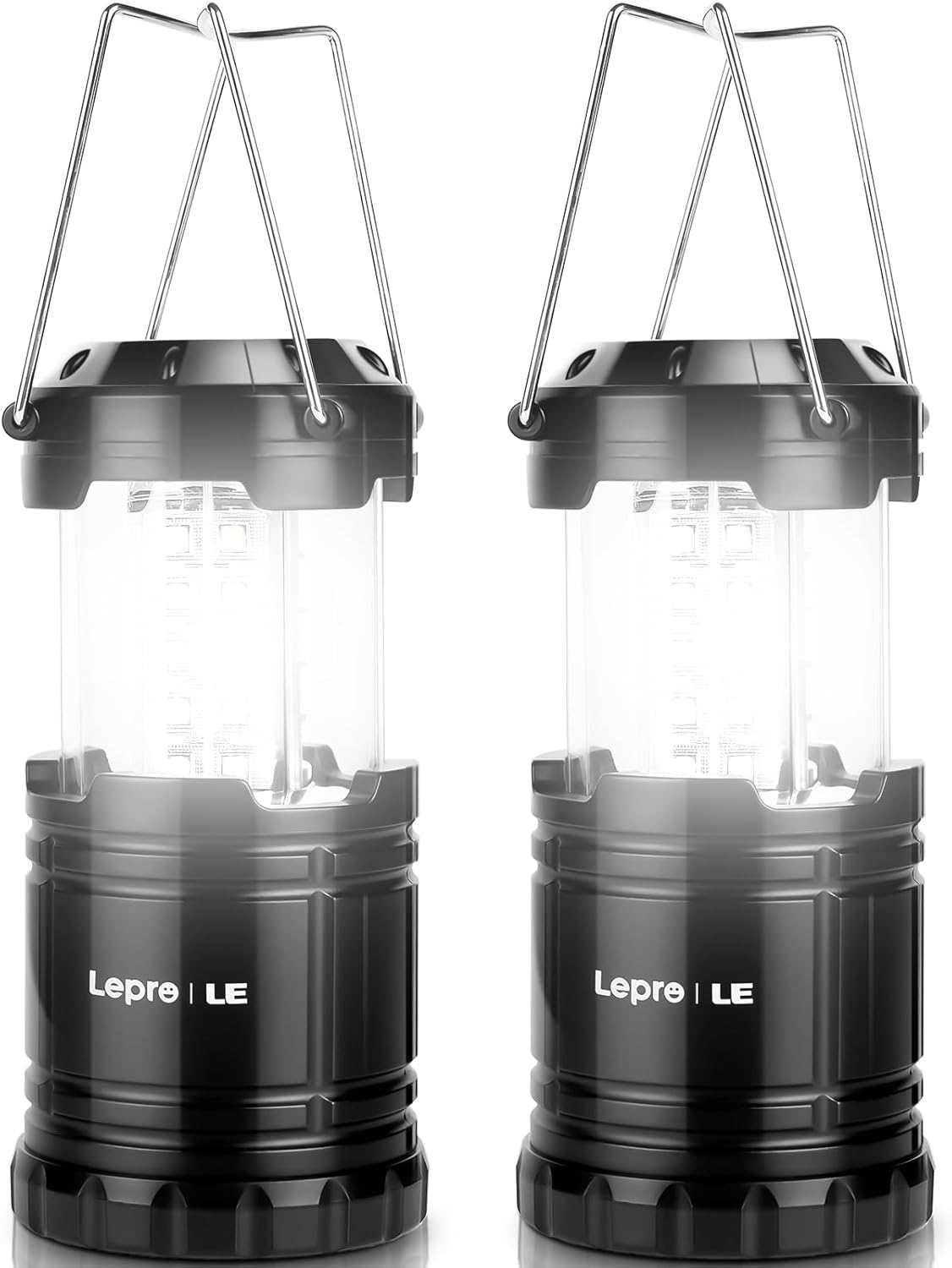
A 190-lumen collapsible 4-pack with splash resistance — the third name in the every-room layer, for houses that find it on sale first.
As an Amazon Associate, Ordinary Prepper earns from qualifying purchases. The three products above have not been reviewed or scored.
Frequently asked questions
What is the best emergency light for a power outage?
A layered set, not a single product: plug-in lights that turn on automatically for hallways and stairs, one bright rechargeable lantern for the room everyone gathers in, and an inexpensive lantern in each bedroom. On this page that is the Amerelle 3-pack, the Goal Zero Lighthouse 600, and the Vont 4-pack — about $110 together for the priced layers, plus the Vont pack when it is in stock.
How many lumens do I need for a power outage?
For finding your way down a hallway or into a bathroom, 100 to 150 lumens is plenty. For a living room where people read, cook, and play cards, 300 to 600 lumens is the working range. Above 600 mostly buys you a shorter battery life, not a better evening.
How long do emergency lantern batteries last?
It depends on the setting more than the lantern. Bright rechargeables give 2.5 to 5 hours on high and 180 to 200 hours on low. A plug-in emergency light like the Amerelle gives up to 7 hours from its small built-in battery. Battery lanterns give 15 to 30 hours per set of AAs at full extension.
Should I get a lantern or a headlamp for a power outage?
Both do different work. A lantern lights a room so nobody has to hold anything; a headlamp keeps your hands free at the breaker panel, the grill, or a repair. The practical standard is one lantern per main room and one headlamp per adult — the headlamps live with the lanterns, not in a camping bin.
Are LED lanterns better than candles for emergency lighting?
Yes, on safety alone: no open flame near curtains, kids, or a gas leak you have not smelled yet. A candle gives 8 to 10 hours of dim light; the lanterns here give evenings of brighter light for weeks on their low settings, and they switch off without a match hunt.
Will a surge protector keep my lights on in an outage?
No. Surge protection guards against the voltage spike that can arrive when power returns; it provides no light and no power while the power is out. Outage lighting and surge protection are separate purchases that solve separate problems — see the surge section above.
Which setup should you choose?
Choose the full three layers if the house has stairs, kids, or anyone unsteady in the dark: Amerelles for the first ten seconds, the Lighthouse 600 for the main room, Vonts for the bedrooms — about $110 all in for the lantern and plug-in layers, plus the Vont pack when it is in stock. Choose just the Lighthouse 600 if one good lantern, a phone charge, and a hand crank for the longest outages is the whole plan. Choose the AlpenGlow 500 instead if the lantern will sit on a table every evening and the quality of the light matters more than the crank. Choose the Vont 4-pack alone if the budget is the tightest and the honest goal is a light in every room tonight rather than the best light in one room. Whichever layer you start with, run the rest of the house through the home power sizer for the battery side of the plan, keep the household emergency checklist on the fridge, and see the rest of this shelf on the Power hub — including the solar generators that recharge all of it when the outage outlasts the lanterns.
Talk it over with other homeowners. If you have run a house on lantern light for a night or three, your hallway setup is exactly what the rest of us are trying to get right before the next storm. The Ordinary Prepper Community on Facebook is where readers compare outage plans, show their setups, and help decide what we research next. Join the group →