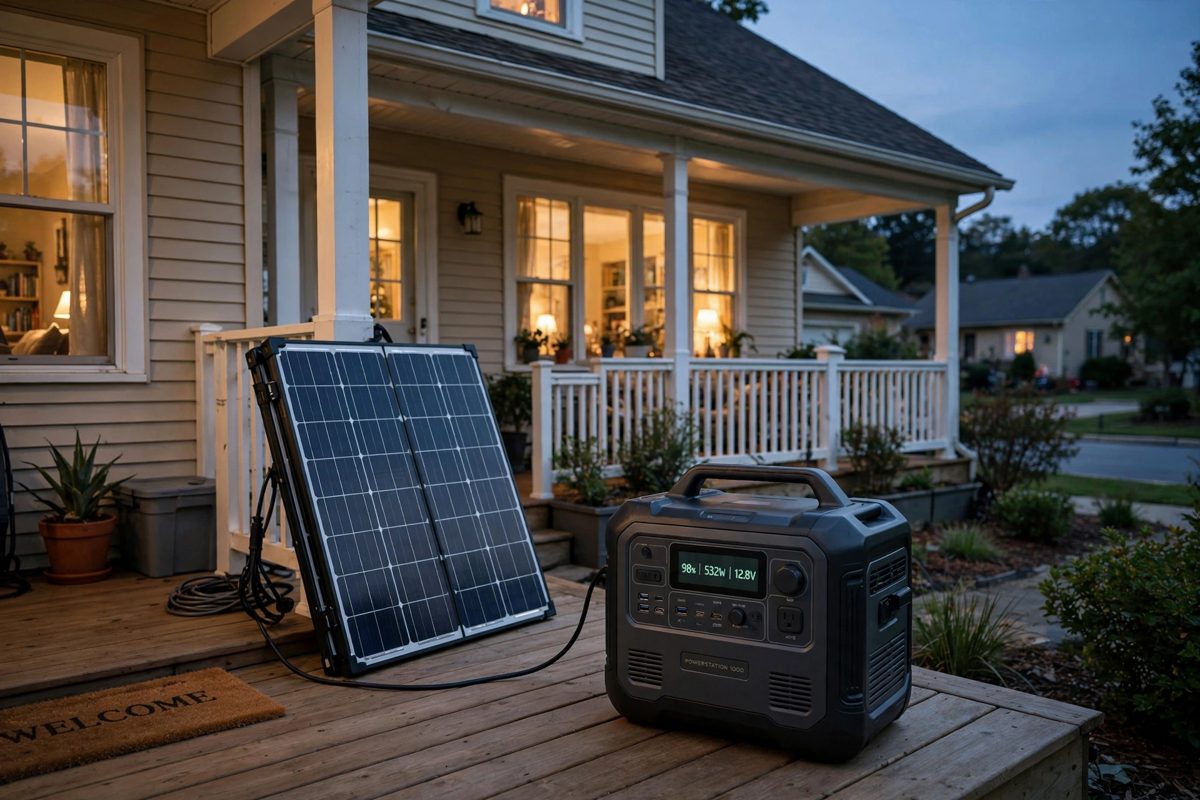
Check what has to keep running; get the battery size that actually covers it. Power stations are sold by two numbers people mix up: watts (what it can run at one moment) and watt-hours (for how long). This sizer does both halves of the math for a home — the daily watt-hours your must-run list eats, the battery class that covers it, and the inverter size that starts your fridge without blinking.
As an Amazon Associate, Ordinary Prepper earns from qualifying purchases.
1. What has to keep running? Hours are per day. The fridge and freezer numbers already account for the compressor cycling on and off.
Why do fridge hours say 8 when a fridge runs all day?
Because the compressor doesn't. A typical refrigerator's motor runs about a third of the day in cycles — roughly 8 hours of actual draw spread across 24 — using about 1,000 to 1,500 watt-hours daily. That's also the trick to stretching a battery: plug the fridge in for a few hours, let it coast closed for a few (a shut fridge holds safe temperatures about 4 hours, a full freezer about 48), and the same battery covers days instead of hours.
What size do most households actually land on?
For the fridge-lights-phones list, most houses land in the 2 kWh class for a day of cover — and the Power hub explains the chemistry and charging questions to ask before buying one, including why LiFePO4 cycle life matters more than brand. Our first comparison on this site scores the leading solar generators as home backup using exactly this sizer's load, so the numbers in the reviews and the numbers here can't drift apart. Backup power for the fridge is week three of the first-month guide.