
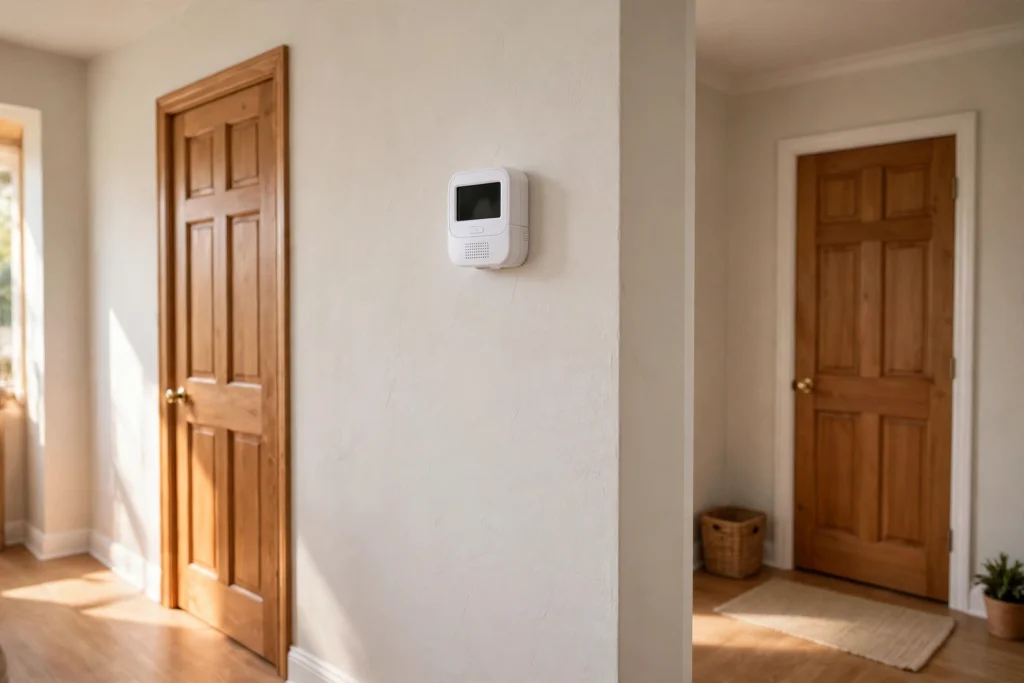
Best Battery Carbon Monoxide Detectors, Compared
Plug-in alarms depend on a backup battery exactly when CO risk spikes. Four battery-only alarms compared — sealed 10-year vs AA vs 9-volt, display vs no display, and how many a house actually needs.
Plug-in alarms depend on a backup battery exactly when CO risk spikes. Four battery-only alarms compared — sealed 10-year vs AA vs 9-volt, display vs no display, and how many a house actually needs.

When flushing stops, a family of four still needs a toilet about 20 times a day. Four setups — two sealed flush tanks, a lined bucket, and a folding gel-bag toilet — priced and judged in days, not gallons.

An outage is six problems at once: food, power, information, medical basics, sanitation, and water. A plain answer for each one, in the order they bite.
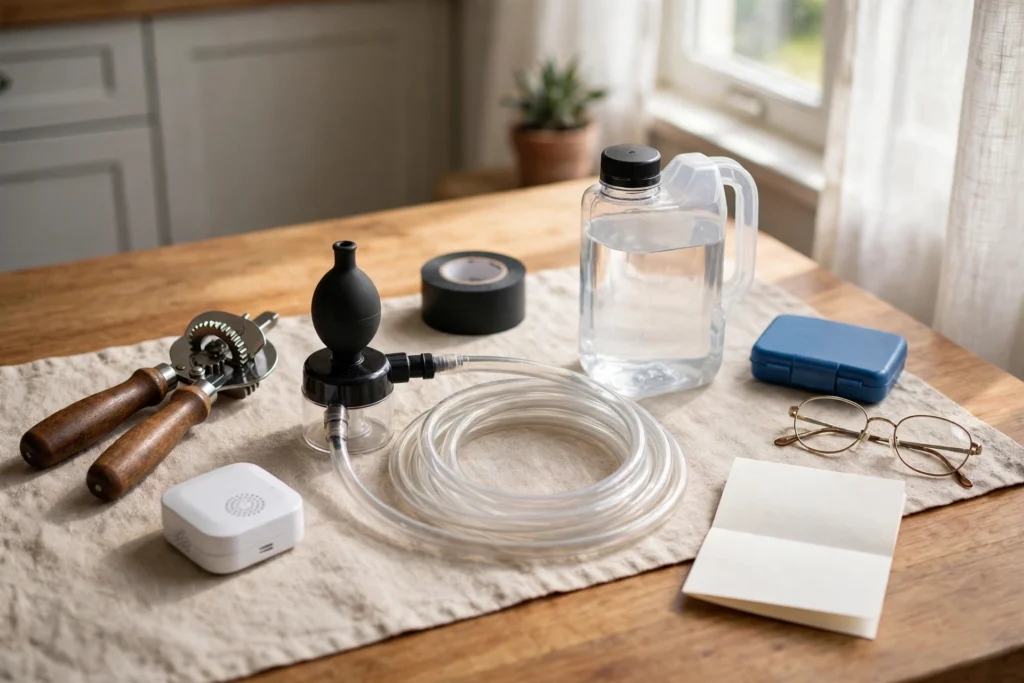
The kits that fail are rarely missing food or water — they are missing the siphon, the CO alarm, the can opener, spare glasses, and the written plan. Ten small gaps, in the order they bite.
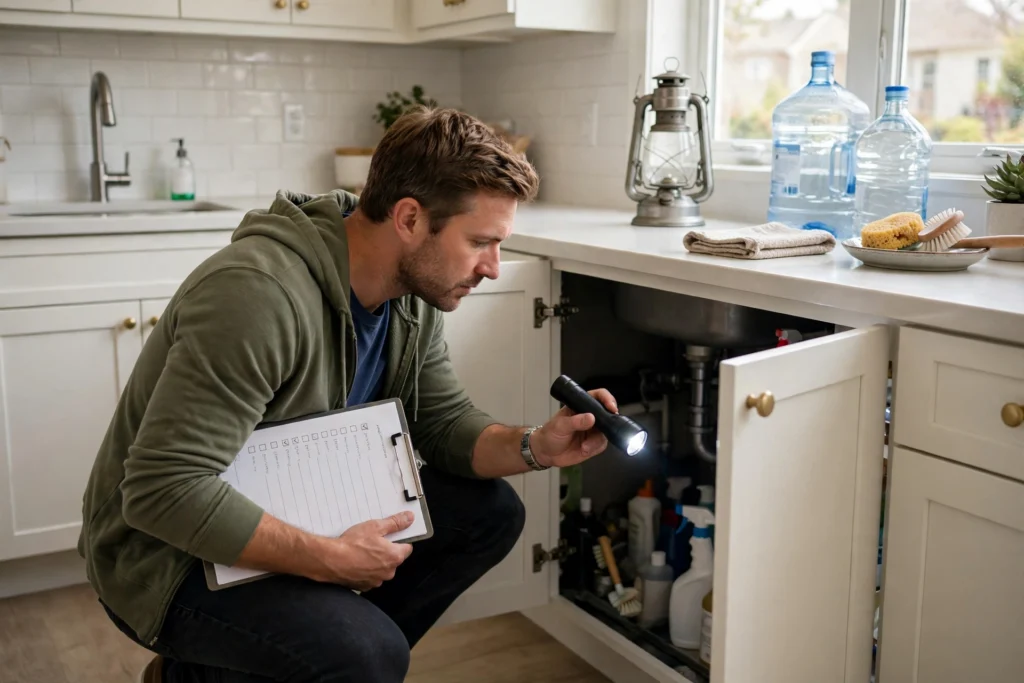
Forty-five minutes, six rooms, 34 yes-or-no checks: the audit that finds the missing CO alarm, the forgotten manual can opener, and the water shutoff nobody can find – before an outage finds them for you.
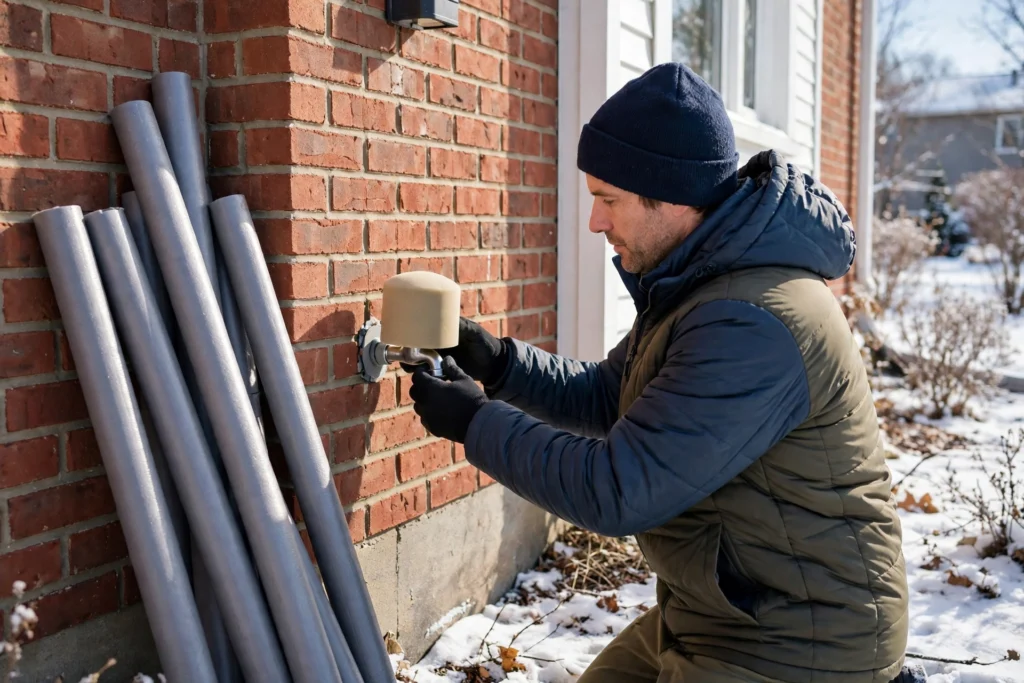
Pipes in unheated spaces can start freezing at 20 degrees outside. The cold-snap sequence that prevents it – drain, insulate, heat cable, 55 degrees – plus the 10 percent headspace rule that keeps stored water from splitting its container.